
Most businesses don’t recognize a simple truth: at their core, they are in the business of trust. Trust sits at the center of every meaningful relationship with a customer, and no relationship runs without it.
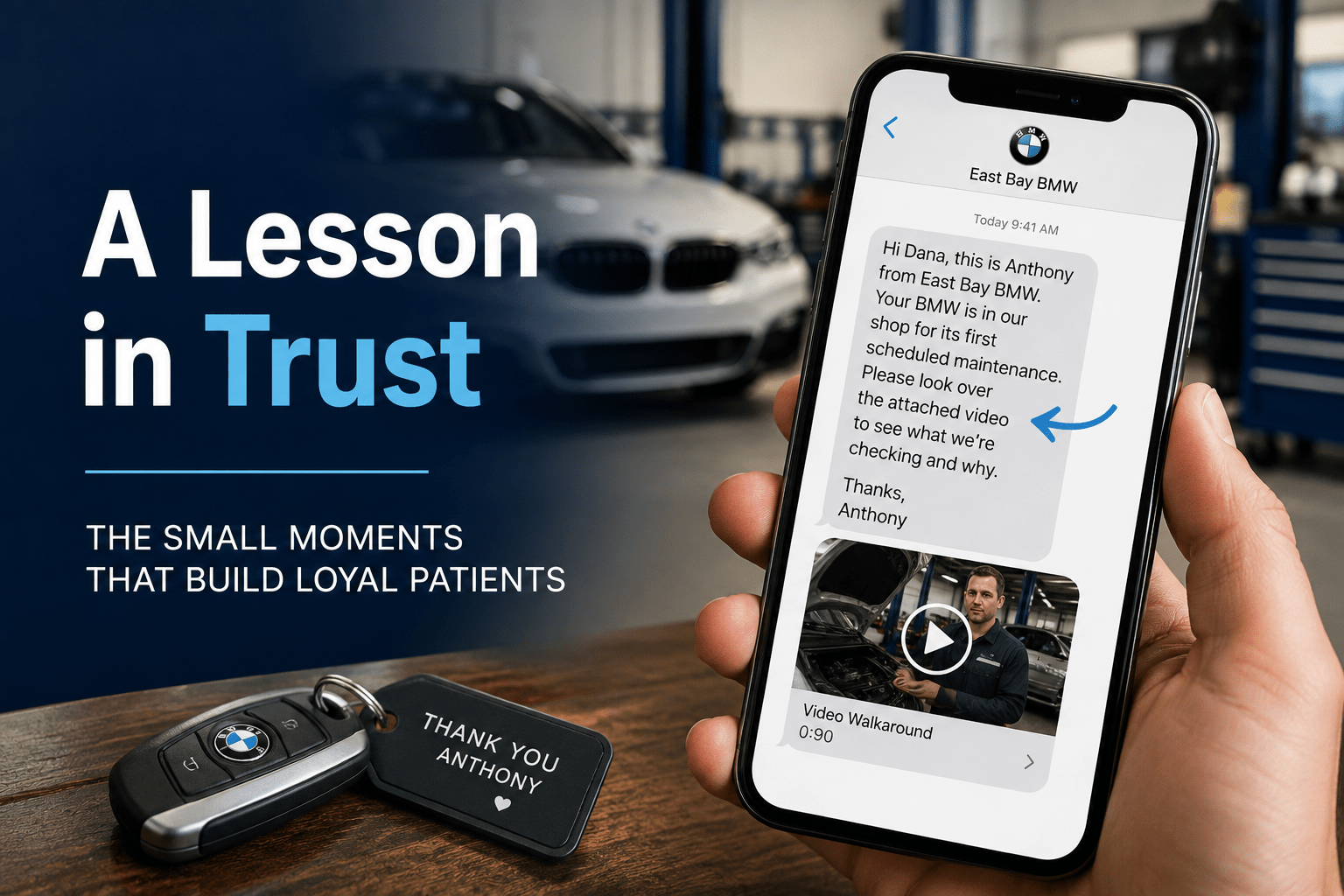
Auto repair is a category that struggles here more than most. Did my car really need that part replaced? I’m in the hands of an expert, and unless I know how a car works, I’m at an informational disadvantage. So imagine my surprise when I got this text from my local BMW dealership after dropping my car off for its first scheduled maintenance.
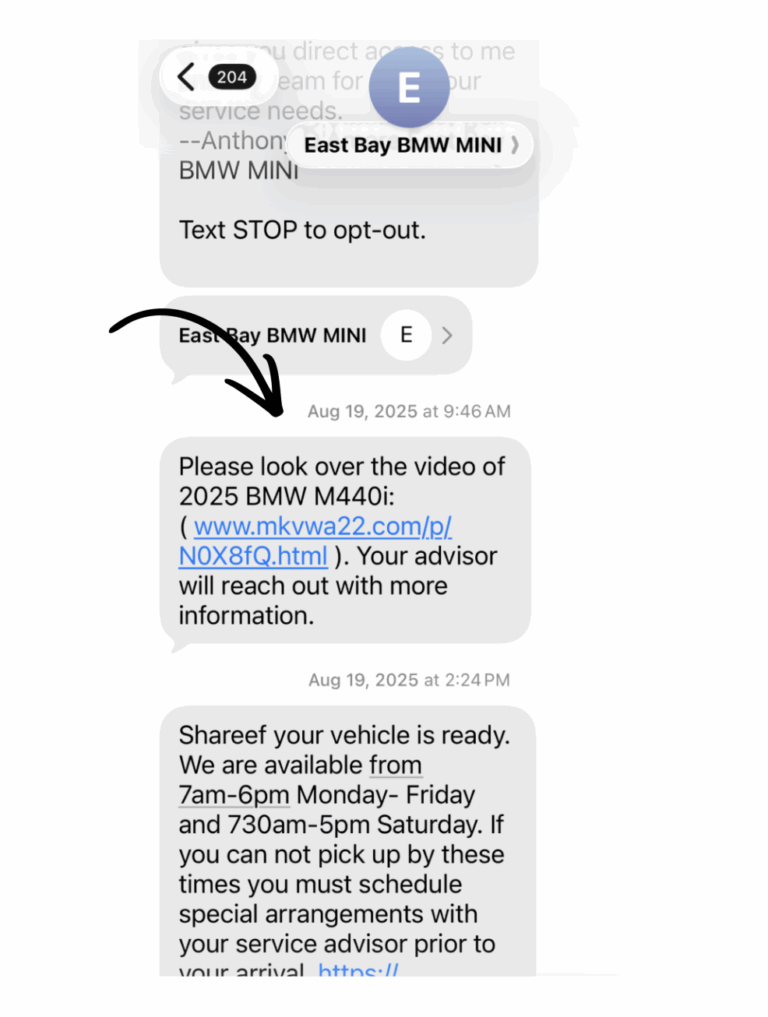
East Bay BMW understands how essential trust is to the customer relationship, so they send a short video from the service technician explaining what they’re doing and why. In decades of owning cars, that was a first. It was a “wow” moment, and it built a real bond with Anthony, the service advisor. Nothing was wrong with the car. I just felt compelled to show my appreciation, so I stopped by that Christmas and gave him a bottle of wine.
The Reality
Now contrast that with what we’re seeing in medicine: a trust deficit between doctors and patients. A few months ago I referenced a study from the Refractive Surgery Council that quantified this gap. It found that social media influencers with zero medical background are sometimes viewed as more credible than a board-certified physician. Part of the Council’s recommendation is for doctors to spend more time on social media to counter misleading information.
It’s tempting to write this off as medicine simply being another institution with a trust problem. But we can’t control what a rogue CEO, politician, celebrity, athlete, or religious leader does. Medical practices can control how patients experience their own encounters. That distinction matters.
The Shift
Take that auto mechanic moment and try inserting it into your medical practice. Ask yourself: what can we do to build even greater trust with our patients? Like BMW, it may come down to how you package and deliver information. It may be a handwritten thank-you note, or a phone call the evening before or after a procedure. There are hundreds of micro-moments where you have the power to build trust, or lose it.
In elective medicine, where the patient controls the decision, one thing is certain: no trust, no procedure. Keep that in mind the next time you’re trying to understand why your acceptance rates aren’t as high as your colleagues’, or as high as you’d expect.
If this got you thinking about how your own team builds, or erodes, trust with patients, PX90 has a full library of short videos on this exact topic, free for members. If you’re curious where your practice actually stands, a PX FitCheck is a good place to start.
Learn more at https://pxmovement.com
Want to see the 90-second video from the auto mechanic? Watch it here: https://api.mykaarma.com/video-walkaround/details?inspection_uuid=68a4a90844bcd50d42d654e4&fileType=image_and_video