
Dr. Charles Kelman used to say it best: while doctors debate, patients decide.
I think about that line every time I hear a room full of physicians argue about whether patient experience is really worth investing in. It’s a fair debate to have in a conference room. The trouble is, the patients you’re trying to attract aren’t waiting for you to finish having it. They’re deciding right now, with their calendars and their checkbooks, and the data says a lot of them are deciding to go somewhere else.
The Reality
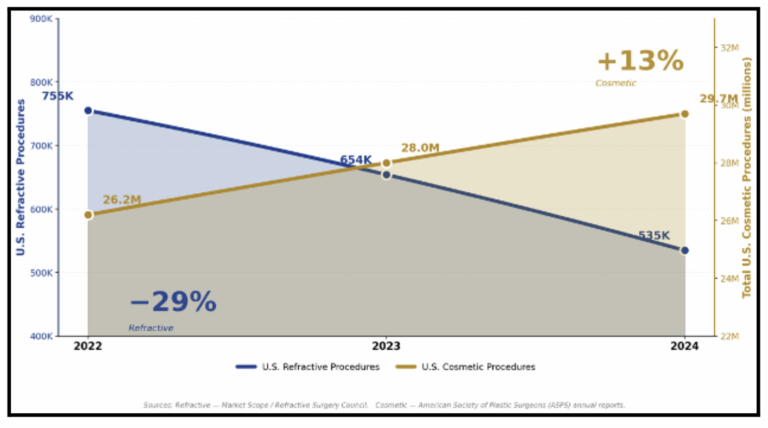
Take a look at two elective, out-of-pocket surgical markets over the same three years.
U.S. refractive procedures, the LASIK category, fell from 755,000 in 2022 to 535,000 in 2024. That’s a 29% decline in just two years. Over the same stretch, U.S. cosmetic procedures grew from 26.2 million to 29.7 million, up 13%. Same kind of patient. Same kind of decision. Cash pay, elective, entirely optional. One market is shrinking fast. The other is growing steadily.My colleague and ASCRS/ASOA co-presenter Daniel Haddad put this chart together and it makes the point better than any slide deck I could build. Dan sees this everyday in the refractive practice he runs outside Detroit, Michigan.
Most practices in the shrinking category assume the answer is clinical. Better lasers, better outcomes, better marketing of the technology. And to be fair, refractive outcomes today are excellent, arguably the best they’ve ever been. But excellent outcomes were never the whole sale. Patients can’t evaluate surgical skill from a website or a five minute consult. What they can evaluate instantly is whether a practice feels like it was built around them, whether the process respects their time, whether someone actually listened before recommending a procedure that costs thousands of dollars out of pocket.
Here’s the part I don’t think is willful. The doctors and administrators who’d be most upset to learn their practice feels transactional are usually the ones who can’t see that it does. Not because they don’t care. Because they’re inside it every day. The hold music, the intake forms, the way the front desk answers the phone on a busy Tuesday, the rushed five minutes before the next patient. You stopped noticing that hallway years ago. Your patient is walking down it for the first time, forming an opinion about you before you’ve said a word.
That’s the blind spot, and it isn’t a character flaw. It’s what happens when you’re too close to your own practice, and too busy running it, to experience it the way a stranger paying cash out of pocket experiences it. Most physicians I’ve worked with, once they actually see it from that angle, want to fix it immediately. The problem was never motivation. It was vantage point.
The Shift
Cosmetic surgery figured this out years ago, not because the doctors were better communicators by nature, but because the category built patient experience into the system. Digital intake that doesn’t feel like a DMV form. Financing conversations happen early instead of as an afterthought. A consistent, practiced way of talking about cost, risk, and outcome that every team member can deliver the same way. None of that is about personality or charm. It’s structure. It’s a shared language across the whole team for how patients are treated before, during, and after the clinical moment.
That’s the core idea behind PX90. Patient experience isn’t a soft skill some staff have and others don’t. It’s a system you can design, teach, and measure, the same way you’d design a surgical protocol. When a team has shared language and clear structure around the patient journey, the results show up in the same place they show up on that chart: retention, referrals, and growth that doesn’t depend on chasing the next piece of technology.
The debate about whether patient experience matters is a legitimate one to have. But it’s worth noticing that the market already rendered its verdict, one procedure at a time, while the debate was still going on.
If you want to see your practice the way your patients actually see it, a PX FitCheck is a good place to start.
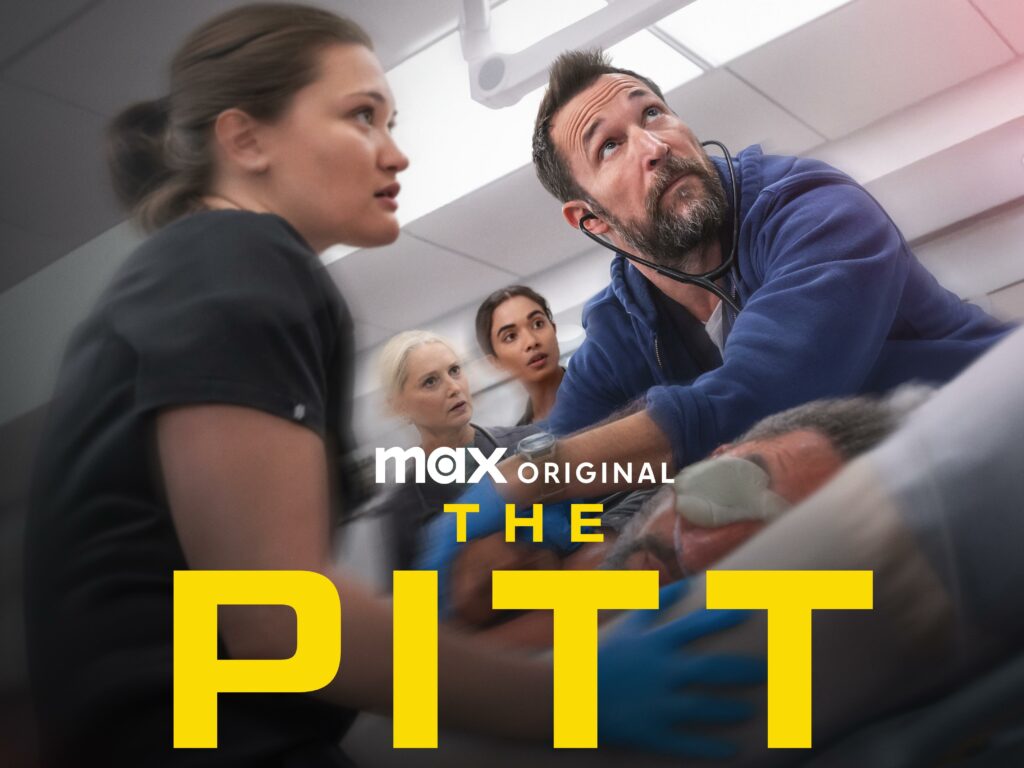
What I’m watching: THE PITT
20 years after he left the hit series ER, Noah Wylie is back and running one! This is a fascinating TV series where the season takes place over a single 15 hour shift in a Pittsburgh trauma center. The show hits close to home as our daughter’s been an ER nurse since she graduated during COVID; and she vouches for its authentic storytelling. I’ve never been prouder of Nurse Avery as I more deeply understand what she and her work colleagues contend with each day.