
You Already Believe in Patient Experience. The Struggle Is Making It Consistent.
by Shareef Mahdavi
You don’t need another article telling you that patient experience matters. You already know it does. You see it in your reviews, your referrals, your team morale, and in the moments when something small goes wrong and feels bigger than it should.
What you want is not inspiration. You want implementation. You want a way to translate belief into daily behavior across every role, every touchpoint, every day.
That’s why this story isn’t about customer service as a buzzword. It’s about culture. It’s about what I learned from Zappos that changed how I think about building a practice patients remember and how listening can become your most powerful competitive advantage.
Zappos Didn’t Just Serve Customers. They Served People.
Years ago, I visited Zappos’ Las Vegas headquarters. If you’ve ever been there, you know it’s not a typical corporate tour. At one point I was crowned “King for a Day.” Yes, there’s a photo. And yes, I’ll share it.
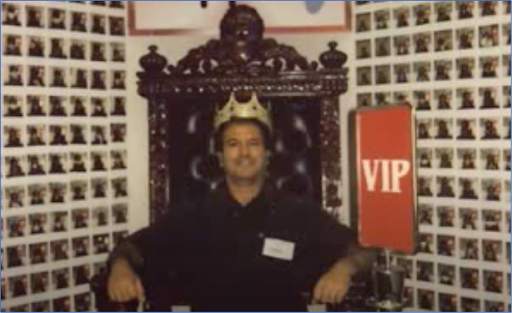
But the crown wasn’t the point.
What struck me most was the culture. Zappos didn’t treat experience as a department. They treated it as a belief system, lived by everyone from warehouse staff to executives. Visitors weren’t guests. They were treated like royalty. The CEO was accessible. And the entire organization was aligned around one idea Tony Hsieh articulated perfectly:
“Customer service shouldn’t be a department. It should be the entire company.”
That sentence is as relevant to healthcare today as it was to retail then.
🎥 Want to see the Zappos visit for yourself?
Watch the video → Wowed by Zappos | Shareef Mahdavi
Culture Was the Strategy (Not the Slogan)
Zappos didn’t win because they had better shoes. They won because they had a better experience, and they engineered that experience from the inside out.
Here’s what made them different:
- Everyone trained together. Titles didn’t exempt anyone from learning how to serve.
- New hires were paid to quit. If you weren’t fully committed to the culture, you were encouraged to walk away.
- PECs, Personal Emotional Connections, were intentional. Building real human connection wasn’t optional.
- Visitors were treated like royalty. Experience didn’t start at the purchase. It started at the door.
Leadership was accessible. Not symbolically. Actually.
Culture wasn’t a poster on the wall. It was the operating system.
Listening Was a Superpower
Here’s the moment that sealed it for me.
While traveling, I noticed Zappos advertising in TSA bins at airports. Everyone has to take off their shoes, so it made sense. But I had a thought. What if Zappos sponsored shoeshine stands instead? A human touchpoint. A service moment. A chance to create a story, not just an impression.
On a whim, I texted the CEO.
He responded.
He set up a meeting with the marketing team.
The idea didn’t make it out of committee. But that wasn’t the point.
The WOW wasn’t in the execution. It was in the listening. My message got through. I was heard. And in that moment, I understood something fundamental. People don’t need you to say yes. They need you to listen.
What This Means for Healthcare
Patients don’t come to you looking for perfection. They come looking for understanding. They want to feel seen, not processed. They want to know their concerns aren’t just noted. They are heard.
Listening is not a soft skill. It is a strategic advantage.
When patients feel heard:
- Trust deepens
- Anxiety decreases
- Loyalty grows
- Stories get told
That’s not theory. That’s how human beings work.
How Far Are You Willing to Go?
Culture change is not comfortable. It requires risk, commitment, and the humility to try ideas that might not make it out of committee.
So let me ask you:
How far are you willing to go to make someone feel heard?
Are you willing to empower your team to try small experiments, even if they don’t all succeed? Are you willing to design moments that don’t show up on a spreadsheet but live on in memory?
Because the practices that stand out aren’t the ones with the newest technology. They are the ones that make patients say, “They really listened to me.”
And that kind of culture doesn’t happen by accident.
Healthcare Needs WOW Now More Than Ever
Today’s patients are more informed, more vocal, and more emotionally aware than ever before. They’re tired of being rushed, talked over, or treated like a number. Clinical excellence is expected. What differentiates you is how you show up as a human being.
Zappos didn’t dominate because they had better inventory. They dominated because they created a better experience. Healthcare can do the same.
The Six Value Drivers in Action
This is where the six value drivers of PX Movement come together to create something holistic and powerful:
Profession: Reclaiming the Why
You entered healthcare to help people. Re-centering on experience reconnects your daily work with that original purpose.
Patients: Making Them the Hero
Every visit is a journey. Your role is not the star. It is the guide. When patients feel guided, not managed, trust follows.
People: Aligning the Team
Experience lives in behaviors. PX Ninety aligns your entire team around shared standards so PX isn’t a solo mission.
Place: Designing for Emotion
From your website to your waiting area to the tone of your follow up calls, your environment either signals care or indifference.
Promotion: Letting Experience Be the Marketing
Word of mouth, reviews, and loyalty come from moments that matter. Every interaction is a form of advertising.
Price: Framing Value Through Experience
When patients feel understood and supported, they are more willing to invest emotionally and financially in their care.
PX Ninety: Your Guide From Belief to Behavior
You’re already committed to delivering great care. What’s frustrating is when patient experience still feels inconsistent.
PX Ninety exists for that exact moment.
- A clear roadmap: Know exactly where to start and what to do next
- Team alignment: Engage everyone so PX becomes a shared mission
- Customization and flexibility: Adapt the pace to fit your practice
- Proven results: Higher satisfaction, stronger teams, reduced burnout, and increased loyalty
This isn’t about adding more to your plate. It is about giving you a structure that makes excellence repeatable.
You don’t need another reminder that experience matters. You need a way to make it stick.
Ready to Take the First Step?
If you want to build a culture that WOWs patients, one where listening is your superpower and experience becomes your competitive advantage, start with clarity.
👉 Take the PX Movement Patient Experience Quiz:
https://pxmovement.com/patient-experience-quiz/
You’ll uncover where your practice is strong, where it’s vulnerable, and what to focus on next.
You already believe in patient experience. Now let’s make it happen.